 Broken Crimp
Climbing holds, features and gear
These are the 37 types you can place on a climb in Broken Crimp.
Holds
Handhold
Any hold for the hand, when its exact type does not matter or is not worth saying.
Jug
Also: bucket
A big, positive hold the whole hand can wrap over.
Crimp
Also: edge
A small edge with room for little more than the fingertips.
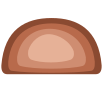
Sloper
A rounded hold with no edge to pull on. It relies on friction, and works best with the body low beneath it.
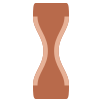
Pinch
A hold gripped between the thumb and the fingers, with the thumb doing as much of the work as the fingers.
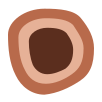
Also: mono
A hole in the rock or in an indoor hold.
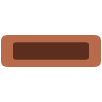
Slot
A horizontal opening in the rock that the fingers or the hand go into.
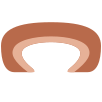
Undercling
Also: undercut
A hold that faces downwards, pulled from underneath with the palm up.
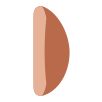
Sidepull
A hold that faces sideways, pulled towards the body.
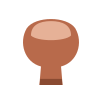
Horn
Also: spike, chickenhead
A spike of rock that sticks out of the wall. It can be gripped, and a sling can go around it for protection.
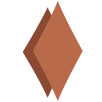
Flake
A thin slab of rock partly detached from the wall, leaving an edge to pull on.
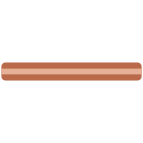
Rail
A long horizontal edge that the hands can shuffle along.
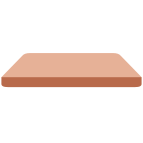
Ledge
Also: shelf
A wide, flat shelf in the rock, sometimes big enough to stand on.
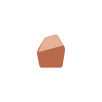
Pebble
A small stone set in the rock, common on conglomerate and on some granite.
Unknown
A hold whose type you have not worked out yet, or that fits none of these.

Smiley
A hold with a smiley face on it.
Features
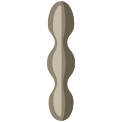
Tufa
A column of limestone that hangs down a wall, formed by water over a long time. Tufas can be pinched, hugged or bridged between.
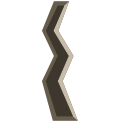
Crack
A split in the rock, climbed by jamming fingers, hands or feet inside it. Cracks also take most trad protection.
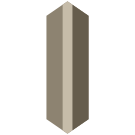
Arête
An outward corner, where two faces of rock meet in an edge.
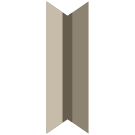
Dihedral
Also: corner, open book
An inward corner, where two faces of rock meet like an open book.
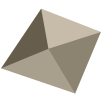
Volume
A large shape bolted to an indoor wall. It can be a hold in its own right, and it changes how the holds on it can be used.
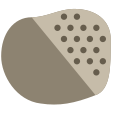
Dual tex
Also: dual texture
An indoor hold or volume with both smooth and rough areas, which changes where it can be held.
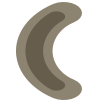
Drop
A large, curved indoor feature, often as big as a volume. Despite the name, most are shaped more like a banana than a drop.
Feet

Foothold
Also: foot chip
Any hold used for the feet, often far smaller than anything a hand would use.

Smear
A patch of rock with no hold, where the foot stays on through friction alone.
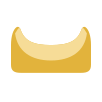
Heel spot
A place to hook a heel.

Kneebar spot
A place where a leg can wedge between a foot and a knee, often good enough to rest on.
Protection

Bolt
A permanent anchor drilled into the rock.

Anchor
Also: chain, belay station
The fixed point at the end of a climb or a pitch, where the climber can be lowered or belay.
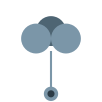
Cam
Also: friend
A spring-loaded device that expands inside a crack and holds a fall by pressing outwards against its sides.

Nut
Also: stopper, rock, wire
A metal wedge on a wire, slotted into a place where a crack narrows.
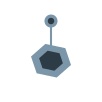
Hex
Also: hexentric
A six-sided metal chock that wedges or twists into a crack.

Tricam
A small pivoting chock, useful in pockets and in shapes a cam will not fit.

Sling
Also: runner
A loop of tape put around a spike, through a thread or around a tree, as protection or to extend a piece of gear.
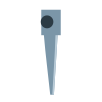
Piton
Also: peg
A metal spike hammered into a crack. Many are old fixed gear found on historic climbs.
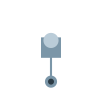
Ball nut
A sliding device for very thin cracks.
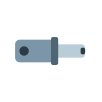
Big Bro
A spring-loaded tube that expands across a very wide crack.